For most Indian shoppers, WhatsApp is where conversations with brands already happen. That makes it the best retention channel most D2C brands have — and the easiest one to ruin by blasting offers at everyone. Here’s what to automate first, what it costs, and the rules that keep customers from muting you.
App or platform?
The free WhatsApp Business app is fine for answering customers one by one from a phone. Once you want automated order updates, cart recovery, or messages triggered by your store, you need the WhatsApp Business Platform (often called the API), usually accessed through a Meta business solution provider that connects it to Shopify or WooCommerce.
How pricing works now
Since 1 July 2025, Meta charges per delivered template message, not per conversation. Templates fall into three categories:
- Marketing — offers, launches, cart reminders. The most expensive category.
- Utility — order confirmations, shipping updates, delivery alerts. Much cheaper, and free when sent inside an open customer service window.
- Authentication — one-time passwords.
When a customer messages you, a 24-hour customer service window opens, and your free-form replies within it cost nothing. Rates vary by country and change over time, so check Meta’s current pricing for India before you budget.
What to automate first
Start with the messages customers want to receive. They earn trust, cost little, and get read.
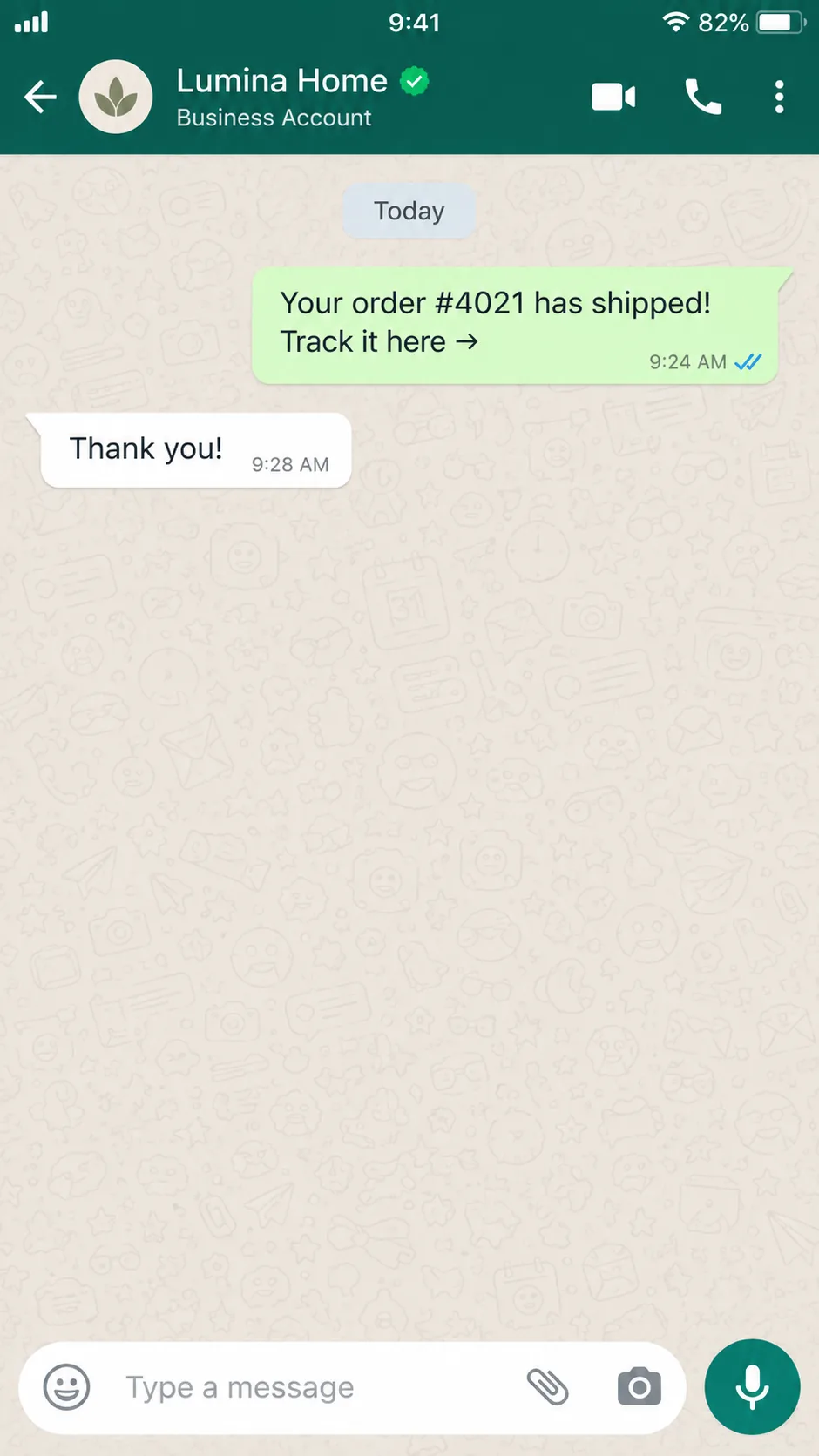
- Order confirmation and shipping updates. Utility messages with the order number and a tracking link. They cut “where is my order?” queries and prime customers to read what you send later.
- COD confirmation. A confirm/cancel prompt before a cash-on-delivery order ships — one of the cheapest ways to reduce RTO losses.
- Abandoned cart recovery. One reminder within a few hours, with the product image and a direct link back to the cart. Usually classed as marketing, so keep it to one or two messages.
- Back-in-stock alerts. Only to people who asked to be notified — high intent, low annoyance.
- Reorder reminders. For consumables, time the reminder to how long a pack typically lasts.
- Review requests. A few days after delivery, when the product has actually been used.
Broadcast campaigns — sale announcements, launches — come last, once the flows above are running and you know which segments respond.
Rules that keep you out of the mute list
- Get explicit opt-in at checkout or through an on-site widget. It’s required, and it keeps your number’s quality rating healthy.
- Cap frequency. Decide a maximum number of marketing messages per customer per week and stick to it.
- Segment. Recent buyers shouldn’t get the same offer as people who haven’t ordered in a year.
- Make opting out easy. A quick “stop” is better than a block — blocks and reports hurt your ability to send at all.
- Have a human behind it. Customers reply. Someone should answer within the service window.
What to measure
- Delivered, read, and click rates per template
- Revenue per message sent, by flow
- Opt-out and block rate
- Cost per recovered cart vs. your margin per order
WhatsApp flows, email, and SMS are set up and run as part of our promotional marketing service — connected to your store so every message is triggered by a real order or cart event, not a manually uploaded list.