Cash on delivery is still how a large share of Indian shoppers prefer to buy, especially from brands they haven’t ordered from before. Turning COD off usually costs more in lost orders than it saves. The real problem is RTO — return to origin: an order that ships, never gets accepted, and comes back.
Every RTO costs you forward shipping, usually reverse shipping, packaging, and stock that sits in a courier network for a week or two instead of on your shelf. And your ad platform still counted it as a purchase. Here’s how to bring it down without killing conversion.
Why orders come back
- Impulse orders that the buyer regrets before delivery
- Incomplete or wrong addresses, and phone numbers that can’t be reached
- Slow delivery — the longer it takes, the more likely the buyer has moved on
- Buyers ordering the same thing from several sites and accepting whichever arrives first
- Fake or prank orders, which cluster around certain pincodes and campaigns
Most of these can be caught before the parcel leaves your warehouse.
Seven fixes, in the order we’d do them
1. Confirm every COD order on WhatsApp before shipping
Send a short confirmation message with “confirm” and “cancel” buttons as soon as a COD order is placed. A cancellation before dispatch costs you nothing; the same cancellation at the doorstep costs you two-way shipping. Orders that stay unconfirmed after a few hours get a call or a second message before they ship.
2. Validate addresses at checkout
Check pincode serviceability, require a landmark, and validate the phone number format. Small checkout fields prevent a surprising number of “address not found” returns.
3. Make prepaid the easier choice
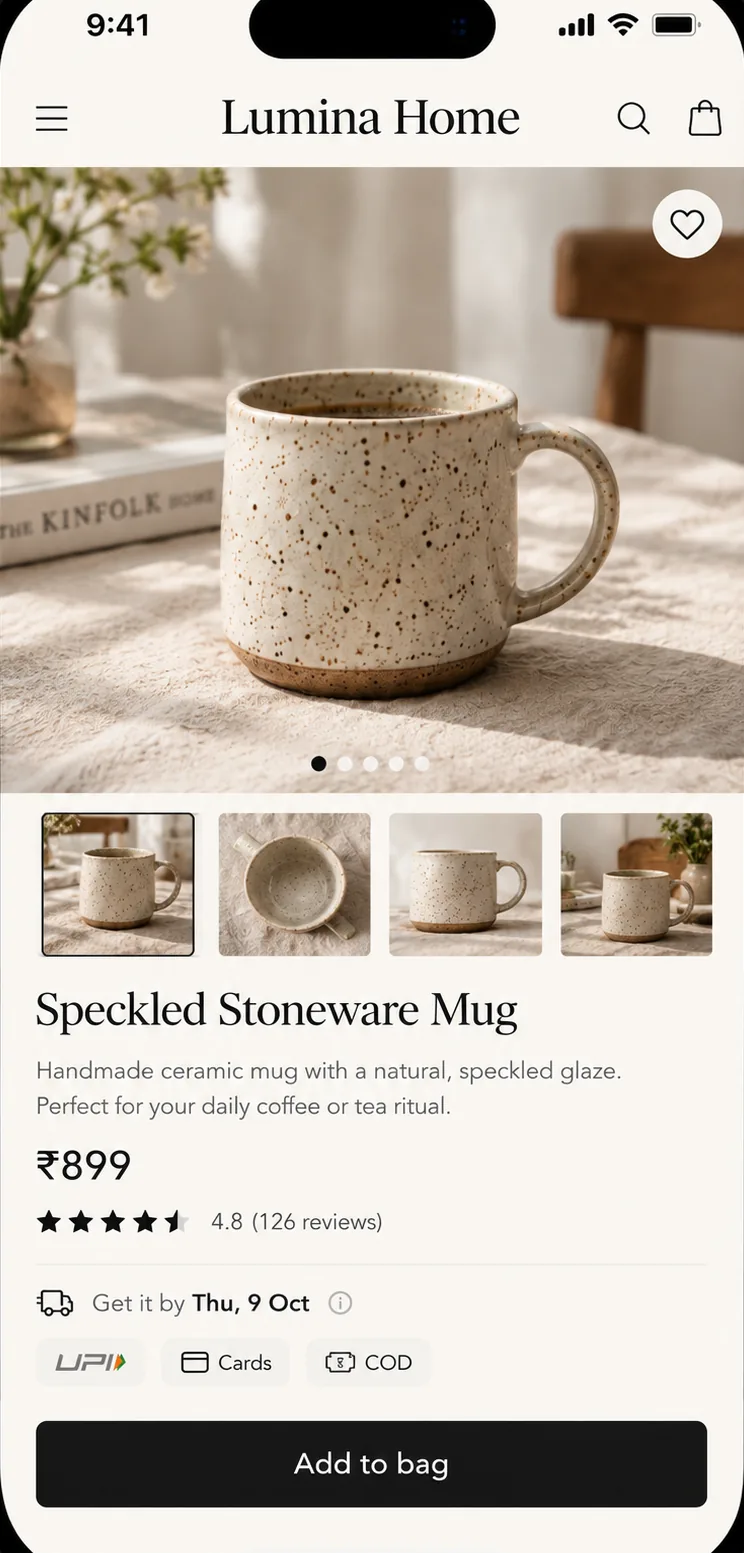
With UPI, paying upfront takes seconds. A small prepaid incentive — free shipping, a modest discount, or a free sample — shifts a meaningful share of buyers away from COD. Show it on the product page and at checkout, not just on the payment step.
4. Set COD rules by risk
You don’t have to offer COD to everyone on every order. Common rules: a COD ceiling on high-value carts, prepaid-only for pincodes with poor history, a small COD fee, or a partial advance on expensive items. Repeat customers with a clean history can keep full COD.
5. Show a delivery date, then hit it
An estimated delivery date on the product page sets expectations, and fast dispatch shrinks the window in which a buyer changes their mind. Orders that sit unpacked for two days are the ones that come back.
6. Act on failed delivery attempts the same day
When the courier logs a failed attempt (a non-delivery report), message the customer immediately to confirm their availability or fix the address. Most couriers only try a few times before marking the parcel for return.
7. Track RTO by pincode, product, and campaign
RTO isn’t evenly spread. Certain pincodes, products, and even ad audiences produce far more returns than others. Once you can see it, you can restrict COD where it’s worst — and stop paying ad platforms to find you more of those buyers.
Count RTO in your ad numbers
Meta and Google record a purchase when the order is placed, not when it’s delivered and paid for. If a campaign drives lots of COD orders that come back, its reported ROAS can look healthy while it quietly loses money. We report delivered revenue per campaign alongside platform ROAS for exactly this reason.
What to measure
- RTO rate, overall and split by COD vs prepaid
- Share of orders paid prepaid
- COD confirmation response rate
- Cost per RTO (shipping both ways plus packaging)
- RTO rate by pincode, product, and campaign
Where we come in
COD confirmation and failed-delivery follow-ups are part of our WhatsApp and promotional marketing setup. Checkout rules, prepaid incentives, and address validation are handled in website development, and our order & inventory software shows RTO by channel and pincode so you can see where it’s coming from.